
When Should Kids See Dentist First?
- Jul 9
- 6 min read
A lot of parents wait until a child complains about pain, but that is usually later than ideal. If you have been wondering when should kids see dentist care begin, the short answer is earlier than most families expect - usually by the first tooth or by the first birthday.
That first visit is not about rushing into treatment. It is about checking that teeth are coming in properly, spotting early concerns, and helping your child get comfortable in a dental setting before fear or pain becomes part of the experience.
When should kids see dentist appointments start?
Most pediatric dental guidelines recommend a child’s first dental visit by age 1, or within 6 months after the first tooth appears. For some parents, that can feel surprisingly early. After all, baby teeth are small, they eventually fall out, and many toddlers are not exactly cooperative patients.
Still, early visits matter. Baby teeth hold space for adult teeth, support speech development, and help children chew comfortably. They can also develop cavities quickly, especially if a child falls asleep with milk, drinks juice often, or snacks frequently throughout the day.
An early appointment gives the dentist a chance to look for signs of decay, assess oral development, and guide parents on brushing, fluoride, teething, and feeding habits. In many cases, the biggest value is prevention. A simple checkup can help avoid more stressful treatment later.
Why early dental visits make a real difference
Parents sometimes assume that if teeth look white and clean, everything is fine. The problem is that early decay, bite issues, or enamel concerns are not always obvious at home. An experienced dentist can catch subtle changes before they turn into pain, infection, or expensive treatment.
There is also a behavioral benefit. Children who start dental visits early often treat them as a normal part of healthcare, not something scary that only happens when something is wrong. That can make future cleanings, fillings, and orthodontic evaluations much easier.
This does not mean every child who comes in young will need treatment. Many do not. But it is much better to hear that everything looks healthy than to discover a problem after your child is already uncomfortable.
What happens at the first dental visit?
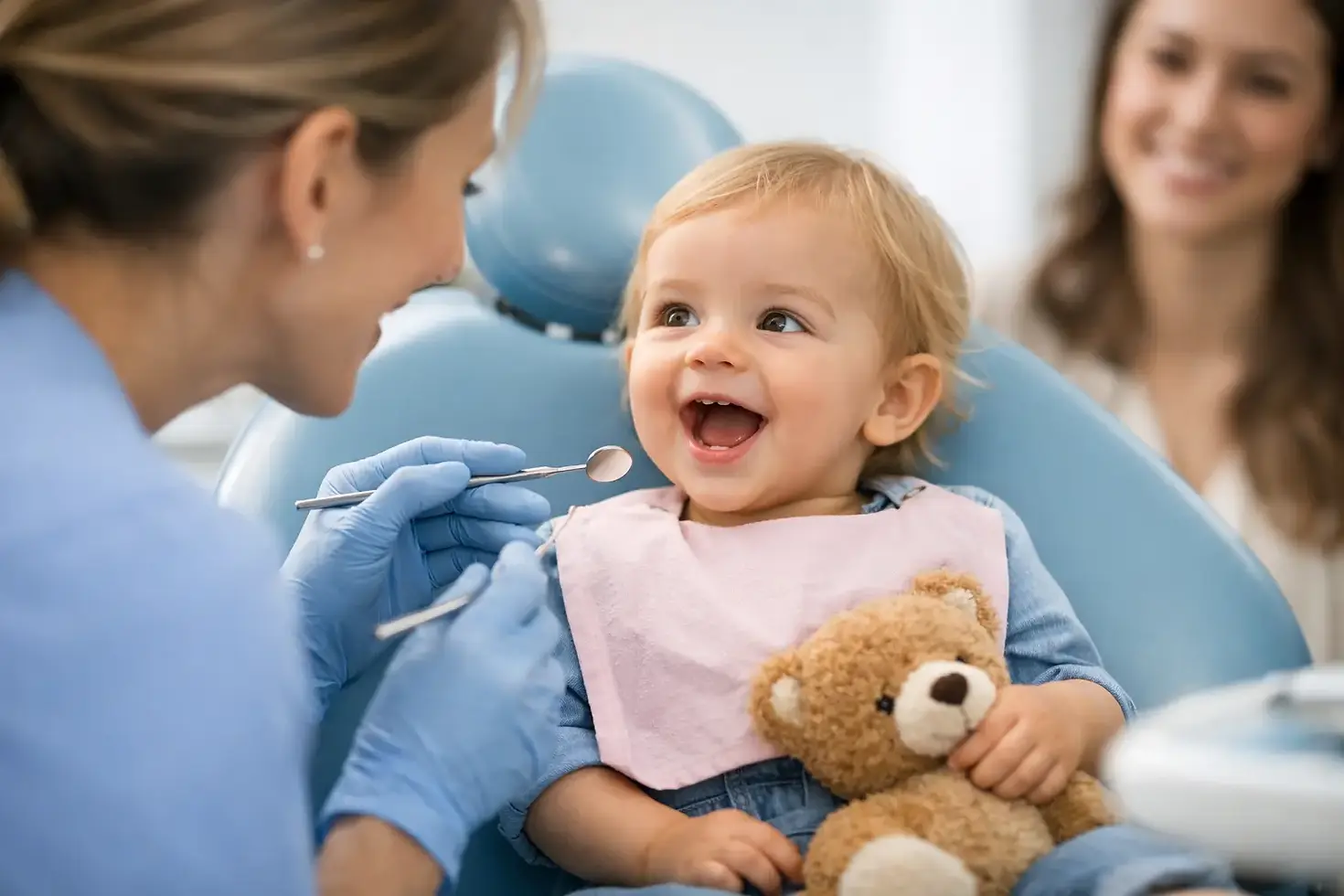
For babies and toddlers, the first appointment is usually simple and brief. The dentist checks the gums, existing teeth, jaw development, and any signs of early decay or habits that may affect growth, such as thumb-sucking or prolonged bottle use.
Just as important, parents get practical advice. That may include how to clean baby teeth, how much toothpaste to use, whether fluoride is appropriate, and what to do if teething is making your child miserable.
If your child is nervous, that is normal. A good family dental clinic will keep the visit calm, gentle, and age-appropriate. The goal is to create trust, not force a perfect exam at any cost.
Signs your child should see a dentist sooner
Even if your child has not reached age 1 yet, some situations call for earlier attention. If you notice white spots, brown marks, swollen gums, bleeding, bad breath that does not improve, or signs of pain while eating, it is worth booking an appointment.
Dental injuries are another reason not to wait. Toddlers fall often, and chipped teeth, pushed-in teeth, or bleeding after a fall should be assessed promptly. The same goes for delayed tooth eruption or any concern that the teeth seem to be coming in unusually.
Parents know their child best. If something seems off, it is better to have it checked than to spend weeks hoping it resolves on its own.
Common reasons parents delay the first visit
One reason is simple timing. Between work, school runs, and daily life, preventive care can slip down the list. Another is the belief that baby teeth are temporary, so they do not need much attention.
There is also a practical concern many parents have but do not always say out loud - will the child even sit still long enough for the visit to be useful? Fair question. The reality is that early pediatric appointments are designed for short attention spans. Dentists who regularly treat children know how to work efficiently and gently.
Cost worries can also delay care. But preventive visits are usually far easier on the budget than fillings, emergency visits, or treatment for infection. For families trying to manage healthcare costs carefully, early checkups often save money rather than add to it.
How often should children go after the first appointment?
For most kids, every 6 months is a good routine. That schedule allows the dentist to monitor development, clean the teeth when appropriate, and catch issues before they progress.
That said, not every child has the same risk level. Some may need more frequent visits if they are prone to cavities, have enamel defects, wear braces later on, or struggle with brushing well. Others with very healthy mouths may stay on a standard six-month schedule without any issue.
This is where personalized care matters. A dentist should guide you based on your child’s age, habits, cavity risk, and dental development rather than taking a one-size-fits-all approach.
Baby teeth matter more than many people think
It is easy to underestimate baby teeth because they do not last forever. But they play a serious role in your child’s health and development. They help guide permanent teeth into place, support normal chewing, and affect clear speech.
When baby teeth are lost too early due to decay or trauma, neighboring teeth can shift. That may create spacing problems and contribute to orthodontic issues later. Not every early loss leads to braces, but it can increase the chance of crowding or misalignment.
Untreated decay in baby teeth can also be painful. Children may avoid chewing on one side, become irritable, sleep poorly, or struggle to focus. Sometimes the first sign parents notice is not a visible cavity but a change in eating or behavior.
Making the first dental visit easier for your child
Parents often worry about how their own anxiety affects the child, and that concern is valid. Kids pick up on tone quickly. If the appointment is framed as something scary or painful, they are more likely to resist.
Keep the explanation simple. Tell your child the dentist will count and check the teeth and help keep the mouth healthy. Avoid promising that nothing unusual will happen, because even harmless new experiences can feel unexpected to a small child.
Try to book at a time when your child is usually rested and fed. A tired toddler at the end of a long day is less likely to cooperate. Bringing a favorite toy or comfort item can also help.
In a family-focused clinic, the team should guide the process clearly and keep the environment as relaxed as possible. That kind of experience matters, especially for the first visit.
When should kids see dentist care if there are no problems?
This is the question many parents really mean. If there is no pain, no visible cavity, and teeth seem to be coming in normally, is an appointment still necessary? In most cases, yes.
Children do not always explain dental discomfort clearly. Early cavities can be painless. Bite development can look normal to a parent but still benefit from professional monitoring. A preventive exam is less about treating current problems and more about making sure hidden ones are not developing.
For families looking for dependable dental care, it helps to choose a clinic that can support both children and adults under one roof. That makes routine visits easier to manage and creates continuity as your child grows. At Best Dental Clinic LLC, that approach matters to many busy families who want straightforward care, clear communication, and a comfortable experience.
A few situations where timing may vary
There are some cases where timing depends on the child. A baby with no erupted teeth at 12 months still deserves a dental evaluation, but the concern may be developmental rather than hygiene-related. A child with special healthcare needs may benefit from an earlier relationship with a dentist, even before any issue appears.
Children with strong cavity risk factors also should not wait. Frequent sugary drinks, visible plaque buildup, limited brushing tolerance, or a history of cavities in siblings can all raise concern. In those cases, the dentist may suggest earlier or more frequent visits.
The right timing is not always identical for every child, but waiting for pain is rarely the best plan.
A child’s first dental visit does not need to be a big event. It just needs to happen early enough to give them a healthy start. One calm appointment can answer questions, ease worry, and make the next visit feel completely normal.


.jpg)


Comments